April 24, 2026
Family involvement in Memory Care is incredibly valuable and, at times, understandably complex. As dementia progresses for a loved one, families often face new emotions, uncertainty, and questions about how to stay connected in meaningful ways. At the same time, Memory Care teams can guide families toward involvement that enhances quality of life for both the resident and the family. As Memory Care Director of The Rushwood Senior Living, I have seen how purposeful family involvement can go far beyond traditional visits. With support and guidance, families can remain active participants in their loved one’s journey.
I help families feel more confident and involved during visits by giving them practical ways to engage with their loved one. For example, I teach families how to use hand-over-hand assistance during events such as painting. This allows them to participate in a supportive and meaningful way. I also encourage families to join daily events instead of watching from the sidelines. That often creates more natural moments of connection.
I also ask about each resident’s hobbies and interests so events can be tailored to experiences both the resident and family member will enjoy together. When events feel familiar and personal, families often feel more comfortable joining in.
Families are supported through ongoing education, reassurance, and simple guidance that helps them feel more comfortable in their interactions. I explain the progression of dementia and help normalize the changes they may see in communication and behavior. I remind them that these changes are part of the disease process. They are not a reflection of the bond they share with their loved one.
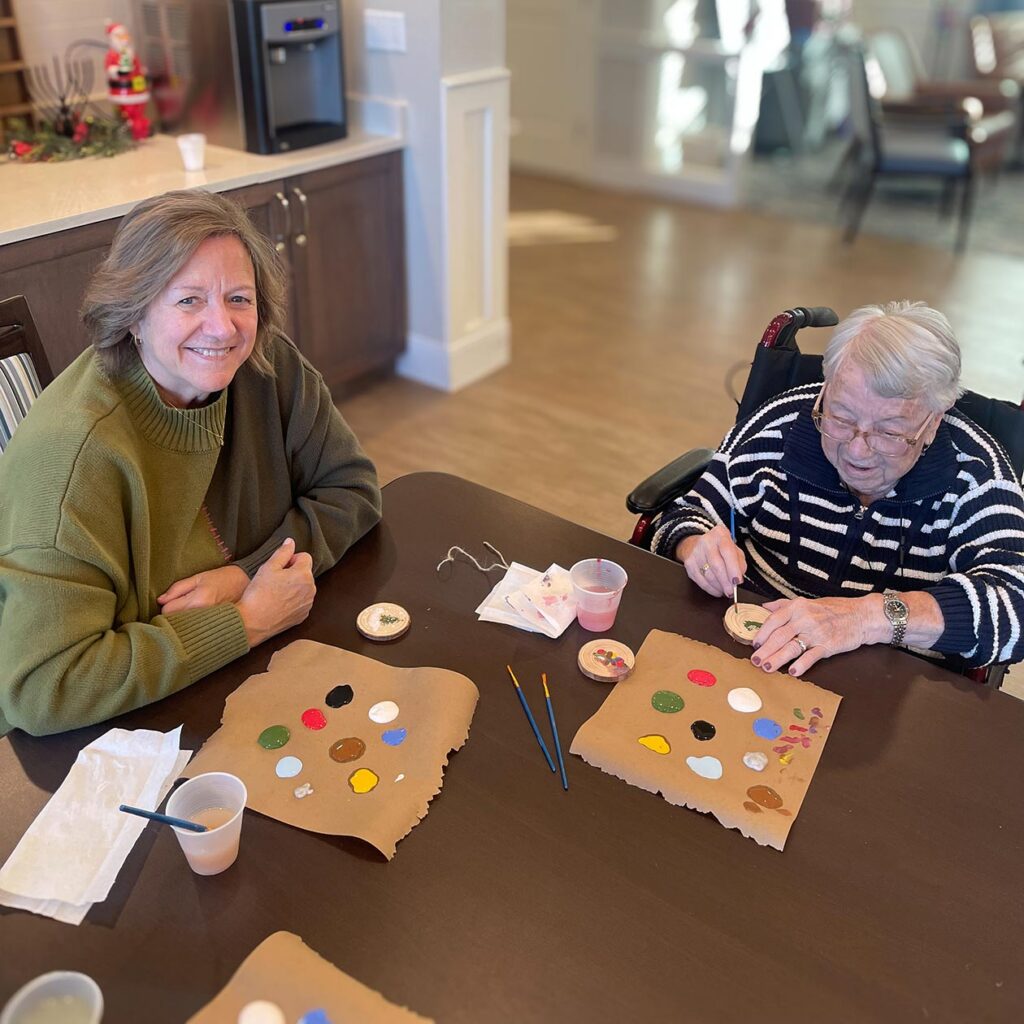
One experience that stands out involved a resident who was consistently resistant to participating in events. Even with several different approaches, she remained unwilling to engage. I encouraged a family member to join the activity with her and offered guidance on how to support her during the interaction. With that familiar presence and encouragement, the resident became more comfortable and agreed to participate. After that positive experience, she grew more open to joining events on her own. Her family’s involvement helped build trust, increase her comfort level, and improve her overall engagement and quality of life. It clearly showed the powerful role family involvement can play in helping residents feel safe, supported, and confident.
When a family member expresses interest in volunteering in the neighborhood, the conversation often begins directly with me, through word of mouth, or after a personal invitation. In one instance, a family member would occasionally play the piano during visits. After discussing it further, she agreed to make it a weekly commitment and now comes every Friday. In many cases, it simply takes opening the conversation and identifying a meaningful way for families to share their time and talents.
There is no one-size-fits-all approach to family engagement in Memory Care. With intention, empathy, and clear guidance, it can become one of the most impactful parts of a resident’s experience. When families feel supported, empowered, and invited into meaningful moments, the result is often deeper connection, improved well-being, and a stronger sense of community for everyone involved. Whether someone is a family member looking to stay involved or a care professional seeking new ideas, I hope these insights inspire thoughtful, compassionate engagement in every Memory Care neighborhood.
The Rushwood Senior Living in Wichita, KS, offers independent senior apartments, assisted living, and memory care with a variety of services and a range of floor plan options. Amenities include restaurant dining, 24-hour bistro, concierge service, housekeeping, events and entertainment, personal care, transportation services, and more. Centrally located near Wesley Woodlawn Hospital & ER with convenient access to major shopping centers and attractions, including Terradyne Country Club, Bradley Fair, Greenwich Place, Botanica Gardens, Great Plains Nature Center, Tanganyika Wildlife Park, Keeper of the Plains, and World Treasures Museum.
Schedule your tour of The Rushwood today

The Rushwood Senior Living serves and employs individuals of all faiths, regardless of race, color, gender, sexual orientation, national origin, age or handicap, except as limited by state and federal law.